Lions
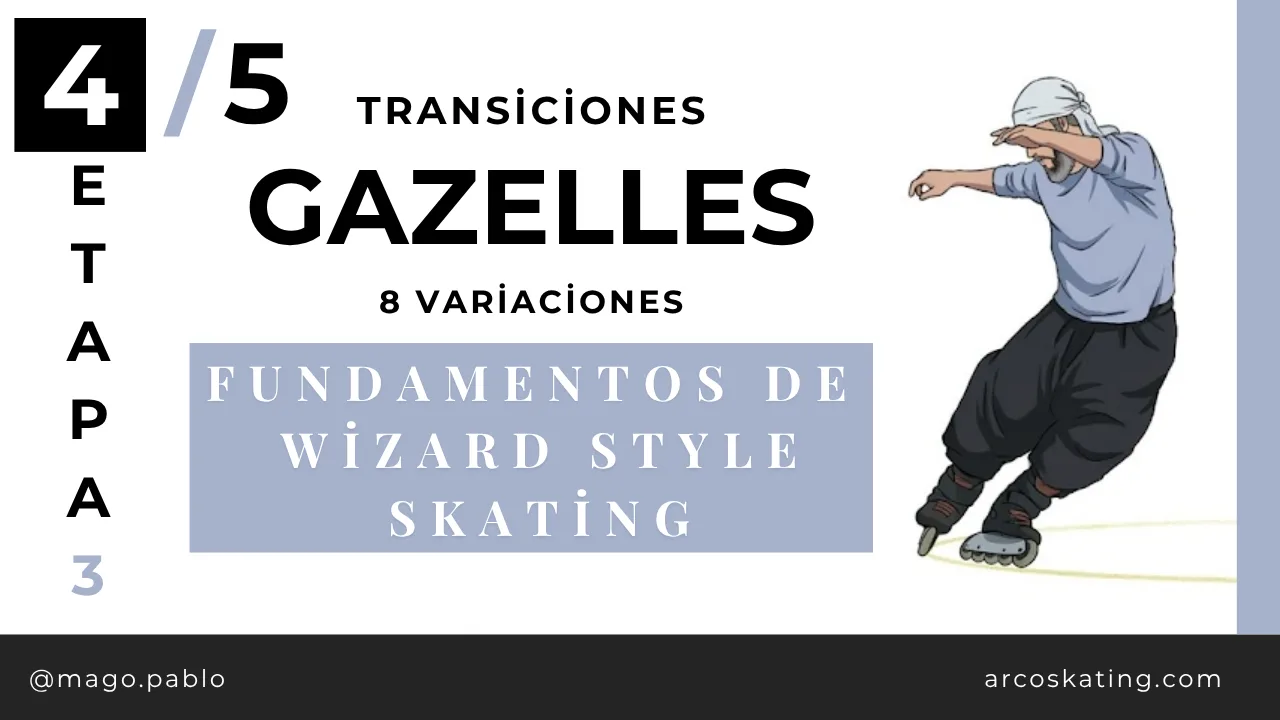
The one-foot version of the Gazelles. The peak of the base fundamentals.
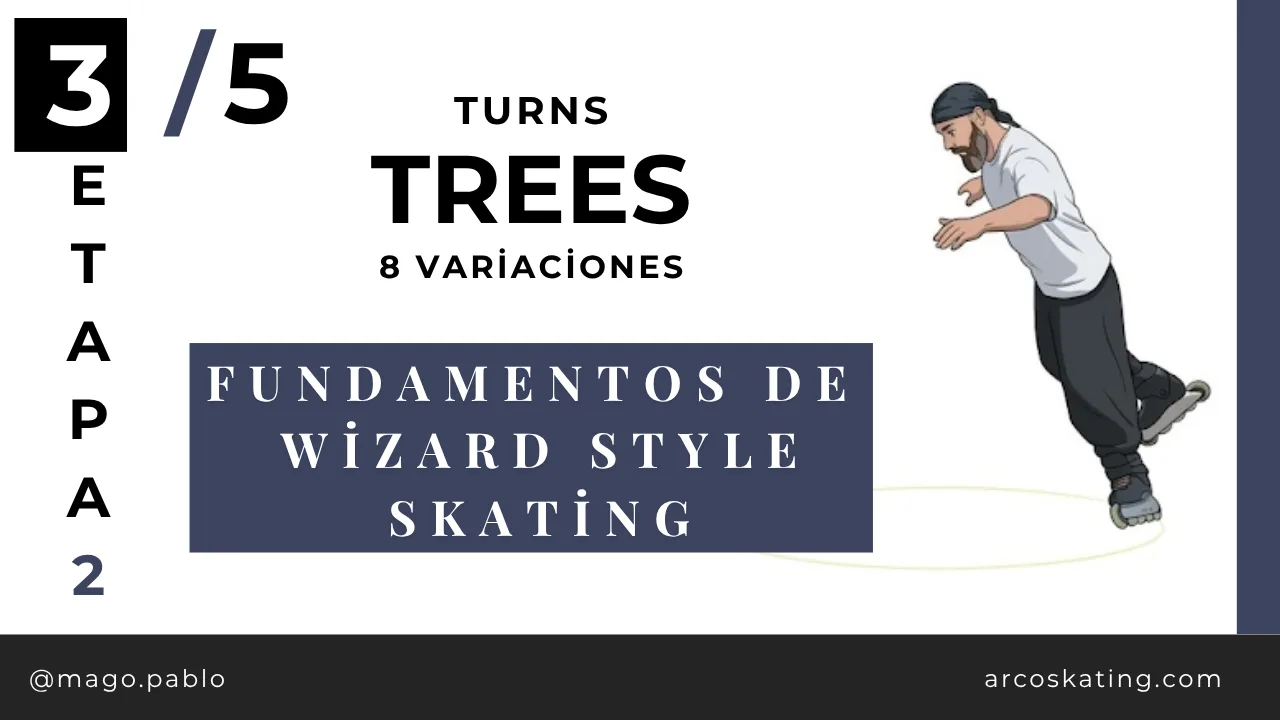
Lions close the base fundamentals. They are one-foot transitions — combinations of two consecutive Tree Turns.
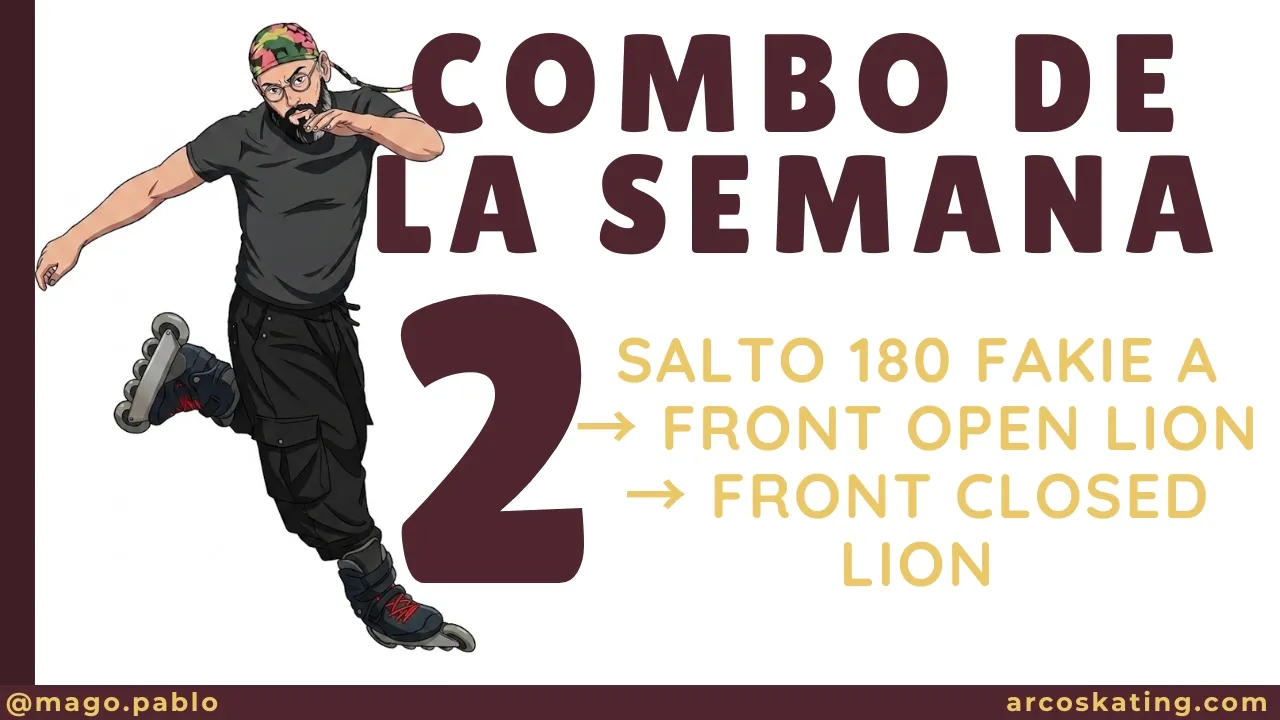
The 4 variations follow the pattern: FOL (Front Open Lion), FCL (Front Closed Lion), BOL (Back Open Lion), BCL (Back Closed Lion). Multiplied by left and right, that's 8 variations in total.
When Lions start coming out clean, you have access to the complete vocabulary of the wizard base. Everything else — combos, bonus moves, fakie gazelle, S move, toe press spin — is built on top of these five stages.
Steps
- Context — the close of the series: Lions are the third and final stage (transitions), now on one foot. Reuse the two circles you left ready for training the gazelles: here you'll chain two Tree Turns over that same drawing.
- Key details before putting on the skates: the leg that travels in the air requires a lot of awareness of its position — that's why it's called the 'tail'. It serves as your guide to generate the rotation, drive the impulses or sustain the torsions. And up top, the shoulders and torso trigger the rotation that produces the impulses along the curved direction.
- What a Lion is: the natural progression between two Trees. You enter with a Tree on one edge; at the climax point (just like in the gazelles) there's a transfer — a weight change and an edge change —, the torso drives the other direction and you exit on the opposite edge from the one you entered with. The name is defined like the gazelle, by the entry movement: if you enter open it's a Front Open Lion; if you enter closed, you exit on the inside edge and it's a closed Lion. Forward, backward, left and right give you the 8 variations.
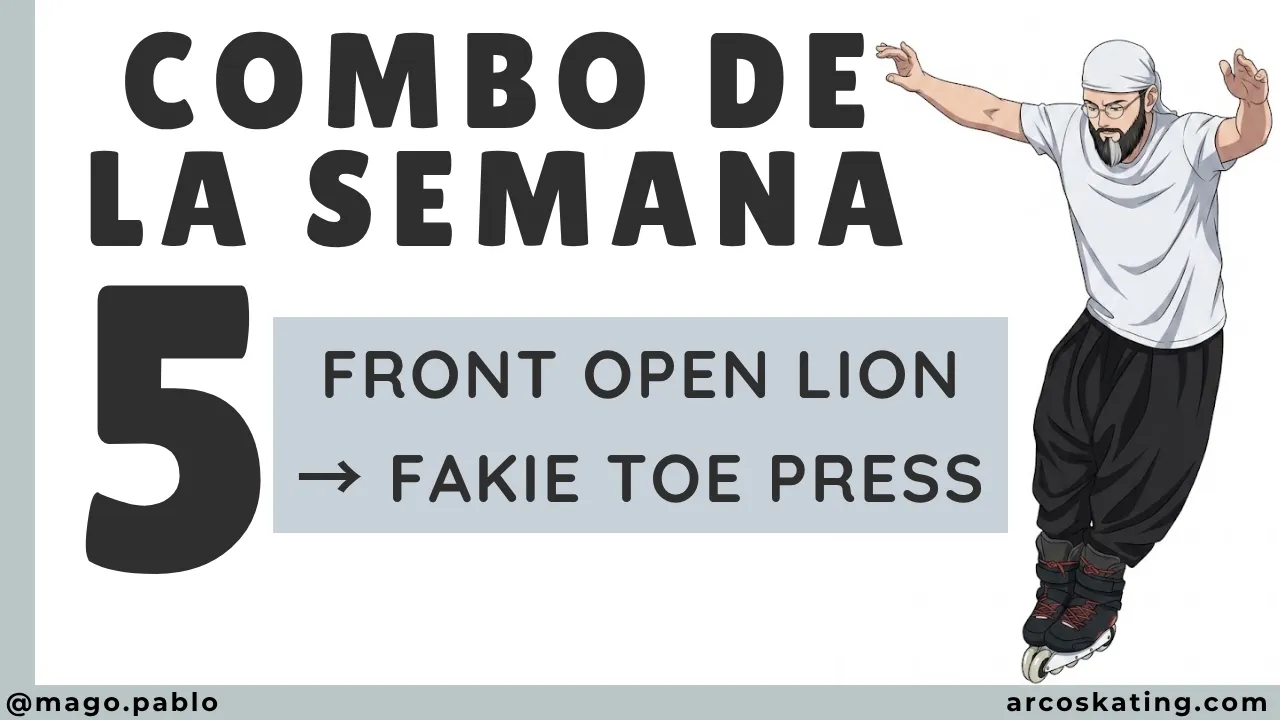
- Front Open Lion (the first one): take a bit of speed and enter your Tree. Swap the position of your shoulders at the midpoint where the circles meet, take your gaze over the shoulder and rotate guiding with the tail. At the center it feels as if you wanted to place an eagle in the direction you're going, but without lowering the foot — it can stay behind the heel. Try one side, then the other.
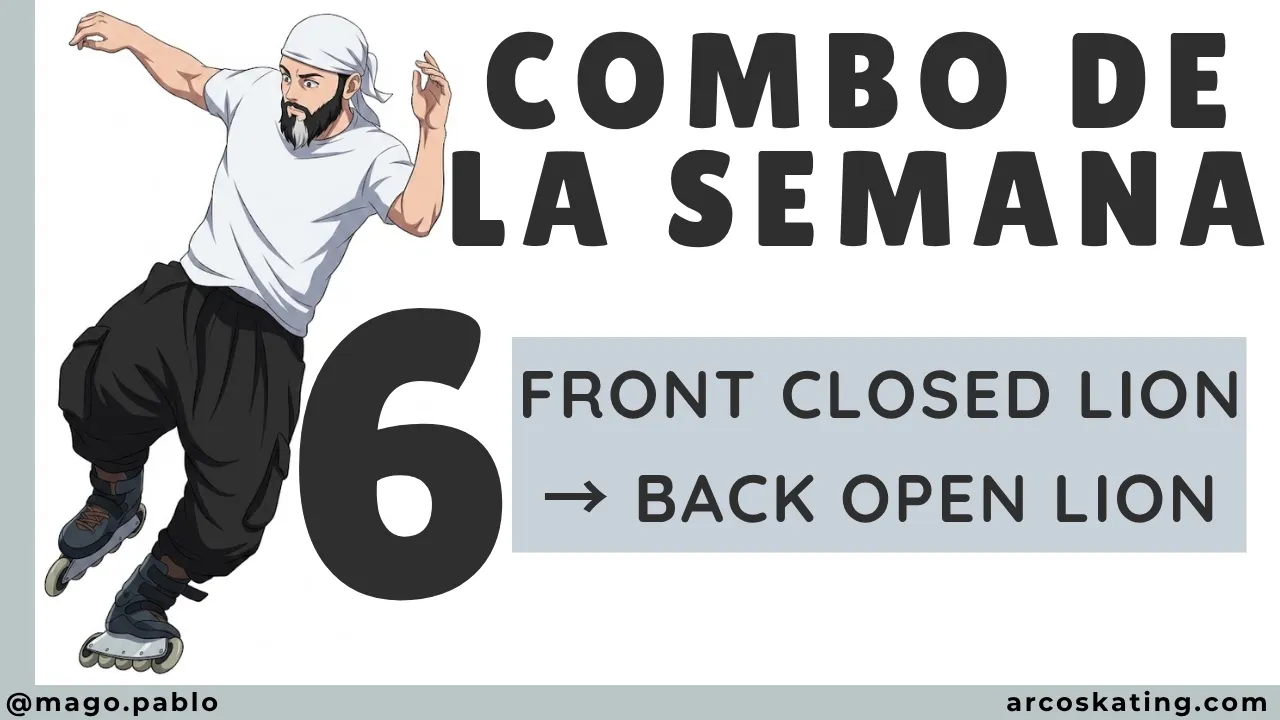
- Front Closed Lion: enter with your closed Tree and exit on the inside edge, guiding yourself. Reach the center, swap, and hold the torsion position so you can push with the inside edge and draw the second arc.
- Back Open Lion: Lions are a progression of the gazelles — if you can already do your back open gazelle, keep that same sensation: push with one leg and let the other draw the shape over the outside edge. The leg enters on the outside edge but the body opening stays open; at the climax change to the inside edge. It's 'open' even though you travel on the outside edge, because what determines it is your posture in relation to the leg that starts the movement.
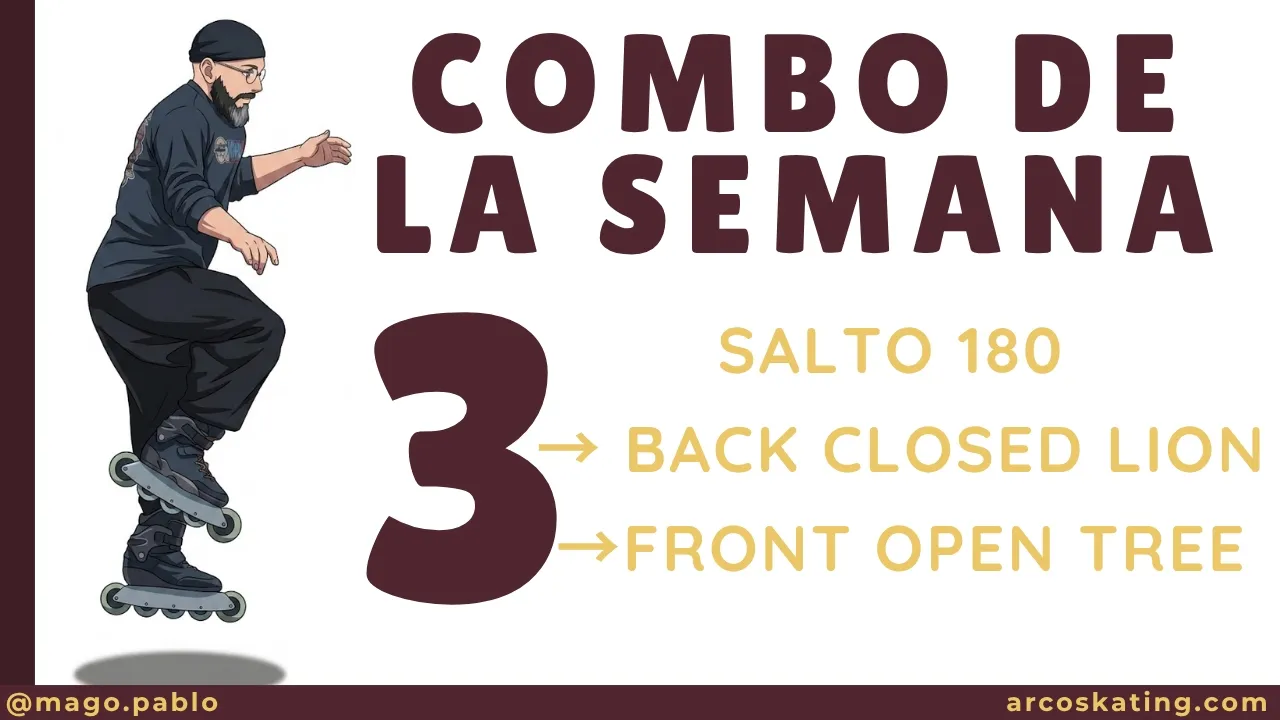
- Back Closed Lion and the 8 variations: if you can already do the closed gazelle you have all the elements — enter on the inside edge and pass to the outside one, completing the two Trees. Remember: Lions are two Trees joined by an edge change; if you enter on the inside you exit on the outside. With open and closed going backward, left and right, you complete the 8 variations of all the Lions.
Common mistakes
- Putting the free leg down during the transfer: if the tail comes down at the climax, the movement turns into something else — a compás or an assisted Lion. Those can work as progressions, but the goal is to stay up: accept the moment of instability; the free leg can even stay behind the heel, without touching the ground.
- A passive tail: the leg in the air isn't decoration — it generates the rotation, drives the impulses and sustains the torsions. If you carry it dead, you lose the guide of the movement.
- Rotating only with the legs: the torso and shoulders drive the rotation. If you don't swap the shoulders at the midpoint (and take your gaze over the shoulder), the transfer doesn't happen.
- Confusing the name with the edge: the Back Open Lion travels on the outside edge and is still 'open' — what defines open/closed is your posture in relation to the starting leg, not the edge you roll on.
In one sentence
The Lion is the natural progression between two Trees: you enter on one edge, at the climax point you transfer weight and edge — the torso drives the other direction, the tail guides — and you exit on the opposite edge, all on a single foot. If your gazelles already come out, you have the elements; with the 8 variations you close the base fundamentals.
Sources
The nomenclature of families and variations follows the official source. The drills, progressions and teaching concepts around it are ARCO's own elaboration, created to communicate the ideas.