Trees
The same turn as the Parallel, executed on a single leg. Much more demanding on balance.
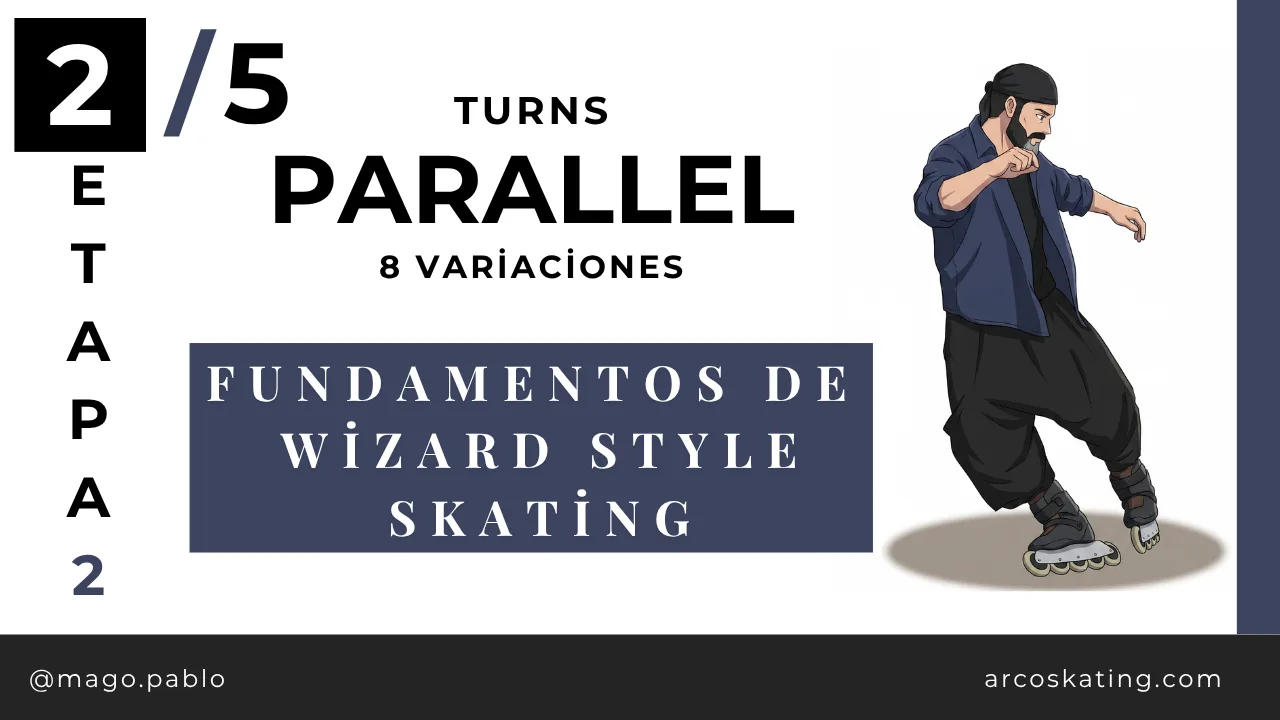
Tree Turns are the one-foot version of Parallels. They have the same 8 variations (open/closed × forward/backward × left/right) but with one leg lifted off the ground.
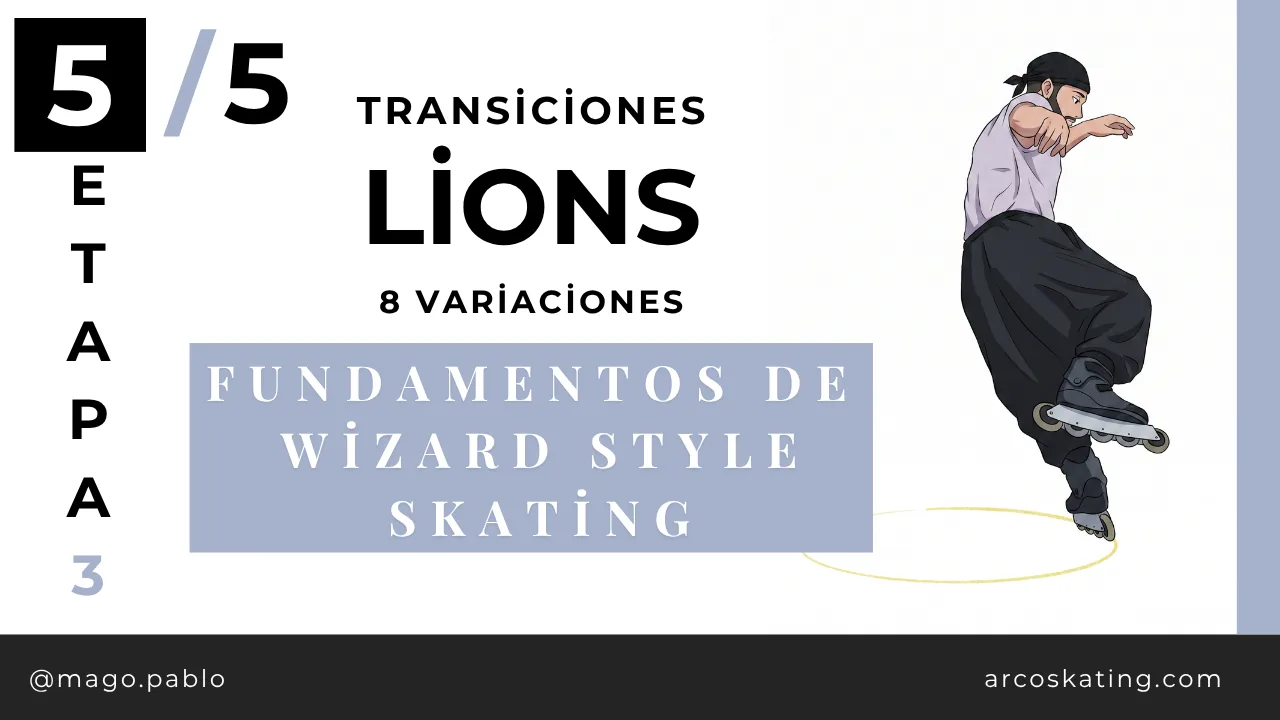
What you gain by mastering Trees: dynamic balance control that later translates directly to Lions, the one-foot transitions.
The main challenge isn't strength — it's sustained posture and activation of the lifted leg to maintain the turn's line without collapsing into an internal pivot.
Steps
- Fundamentals applied to one foot: you already know the Predator stance and the edges from Parallels. Trees use that same logic but with one leg in the air. The free leg guides the movement; conscious balance on the rolling leg is what sustains the turn.
- Impulse from V-position (without skates): stand in front of your circle in a V-stance with arms up. Push with the leg that'll end up in the air — the leg executing the Tree presses toward the inner edge, toward the inner bicep. Shoulders follow the line of rotation; the torso guides the curve.
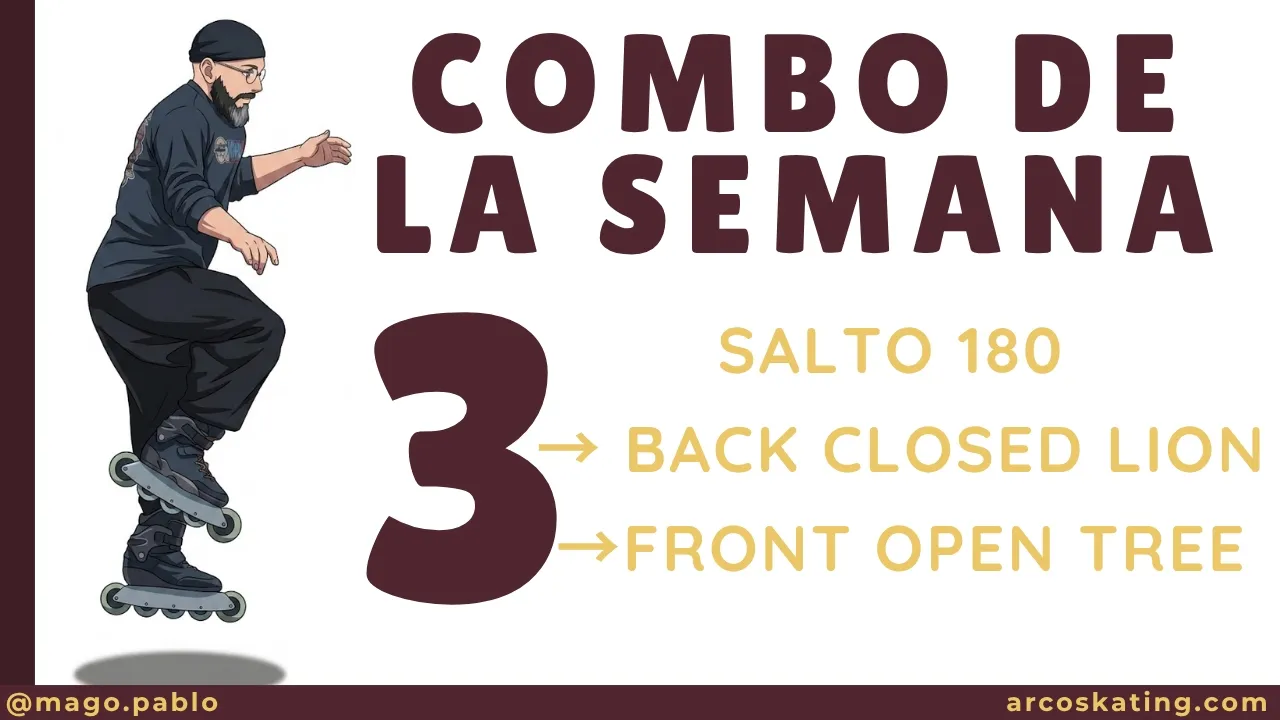
- Front Open Tree — 2 variants (left/right): approach the circle diagonally in Predator. As you enter, change the edge and let a single foot follow the direction of the circle while the other leg lifts. Hold the turn as far as your body can sustain. Practice entering with the left foot and with the right.
- Front Closed Tree — 2 variants (left/right): same entry but with a slight torso rotation, foot in the air, and weight on the outer edge. As a prerequisite you can do a cross-step first and push with the back leg to enter the Tree; or arrive diagonally and push from there. Practice left and right.
- Back Open Tree — 2 variants (left/right): the progression is to add one step to what you already know. Enter in fakie in your base stance, start your Parallel, and the moment you engage, push and stay on the outer edge. Start soft: enter, lift, and hold half an arc with the torso rotating in the direction of travel. No torsion — think you were about to do an eagle but, instead of placing it, you let the body go.
- Back Closed Tree — 2 variants (left/right): base stance with a slight torso rotation, and now the back leg is what lifts. Same approach: start your Parallel in fakie and simply lift the foot while holding the body in that position. Practice left and right.
- 8 variants covered — left/right × open/closed × forward/backward. When each one starts coming out consistent, you have the base for the next stage: the transitions (Gazelles and Lions). No shortcut — you have to play, explore, and feel what works for your body.
Common mistakes
- Jumping to Trees without solid Parallels: it's the same mechanics on a single skate — if the two-foot turn isn't clean, on one leg it falls apart.
- A switched-off free leg: the leg in the air isn't decoration; it guides the line of the turn. If it hangs dead, the body collapses into the internal pivot.
- A rigid support leg: a bent knee sustains the curve and absorbs the ground; a straight leg throws you off the edge at the first bump.
- Practicing only forward: the 4 fakie variants build the half of the balance that Gazelles and Lions will demand later.
In one sentence
The Tree is your Parallel on a single foot: same circle, same edges, same logic — but now the balance and the curve live on one leg.
Sources
The nomenclature of families and variations follows the official source. The drills, progressions and teaching concepts around it are ARCO's own elaboration, created to communicate the ideas.