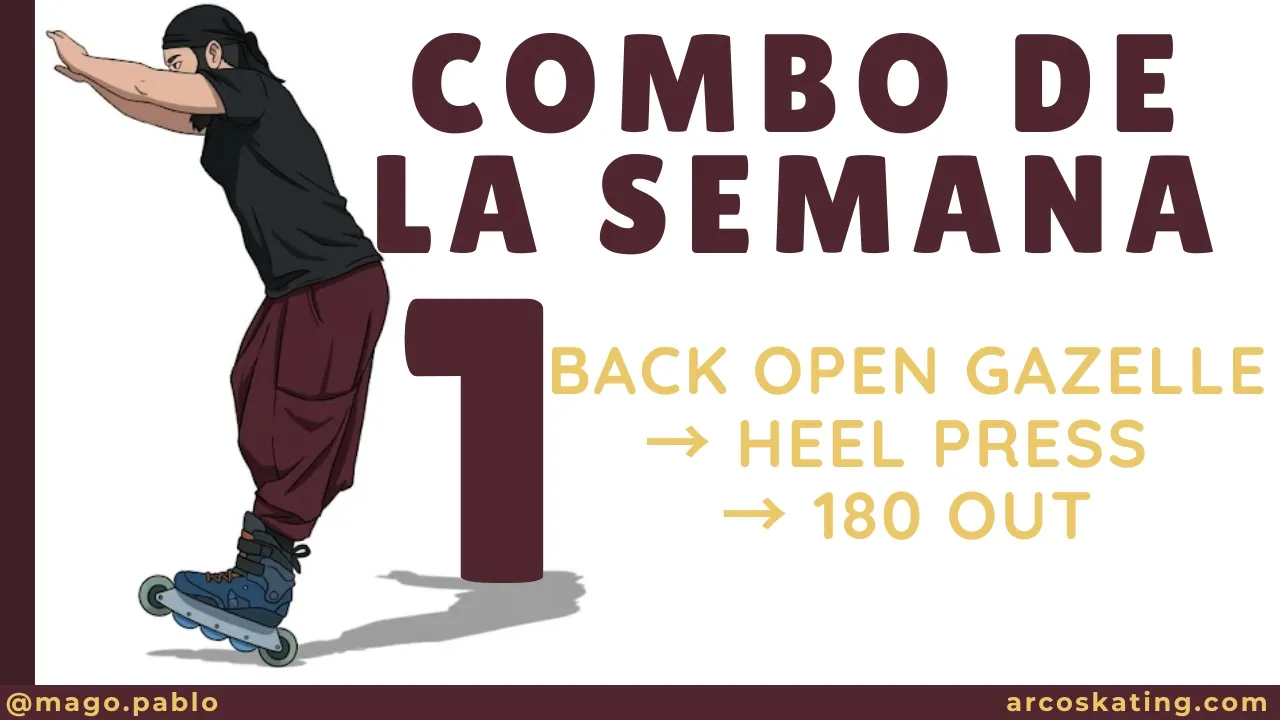
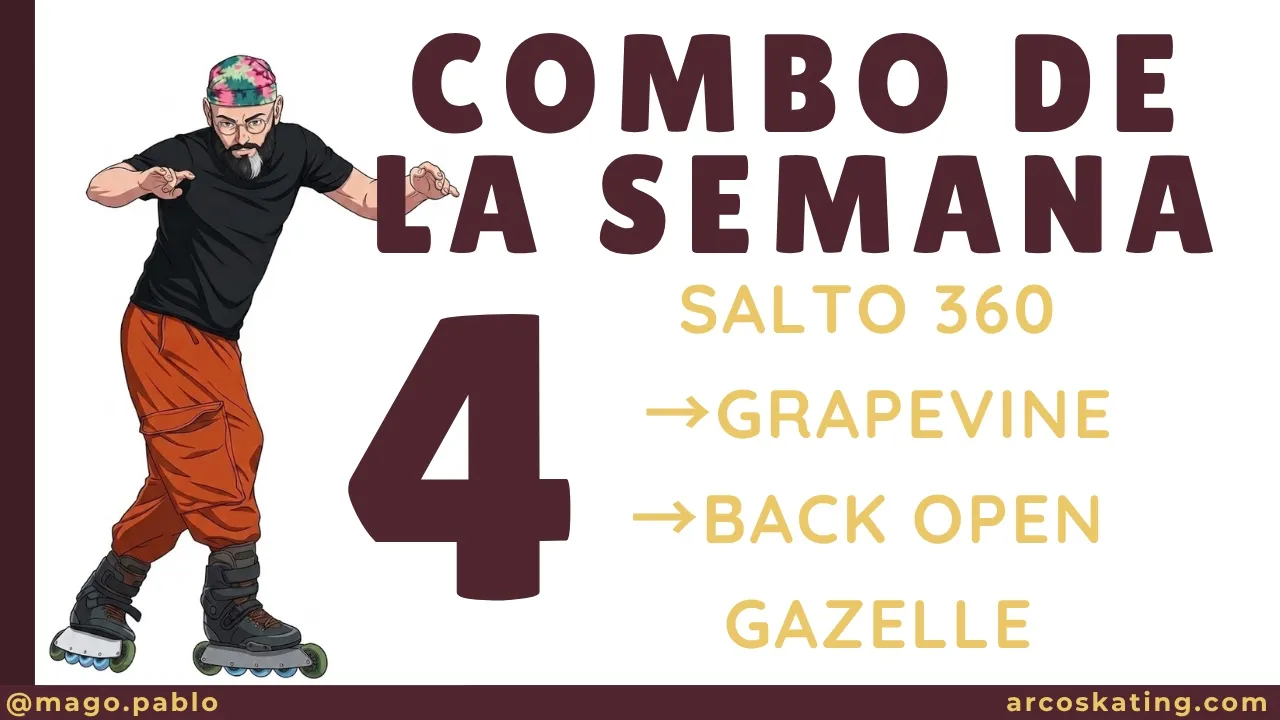
Gazelles
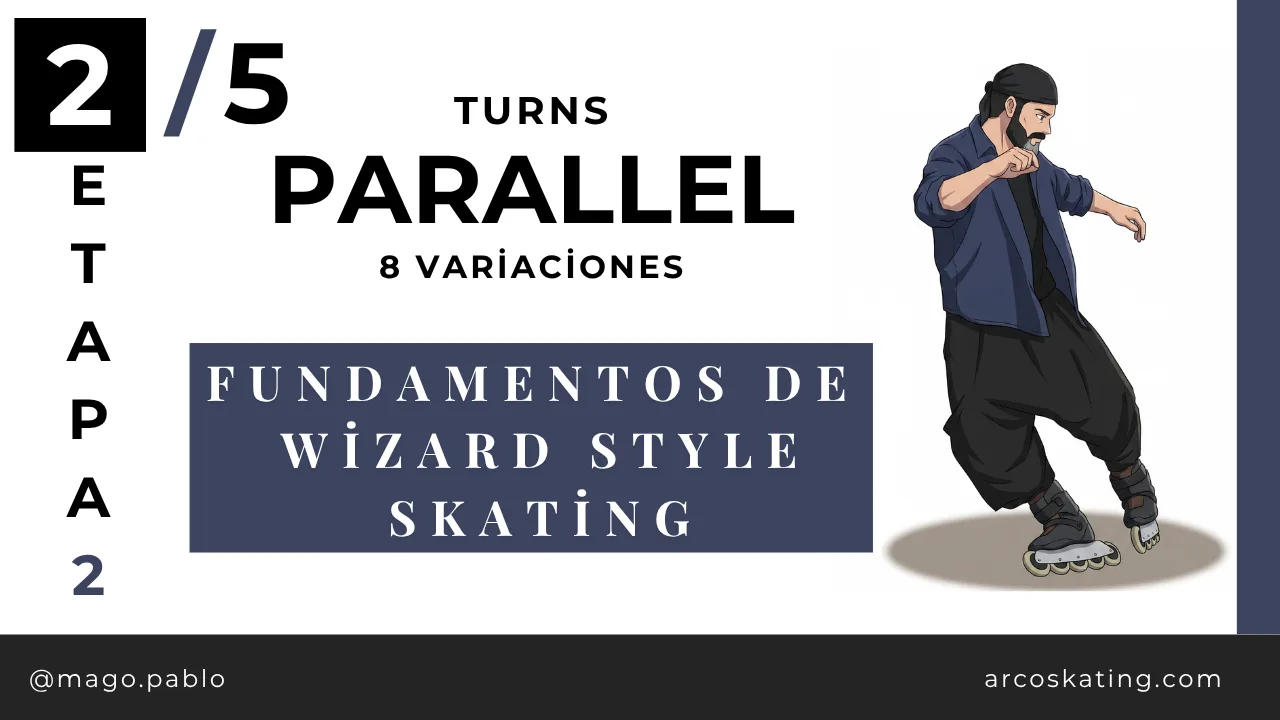
The four combinations of two consecutive Parallel Turns. This is where the wizard flow begins.
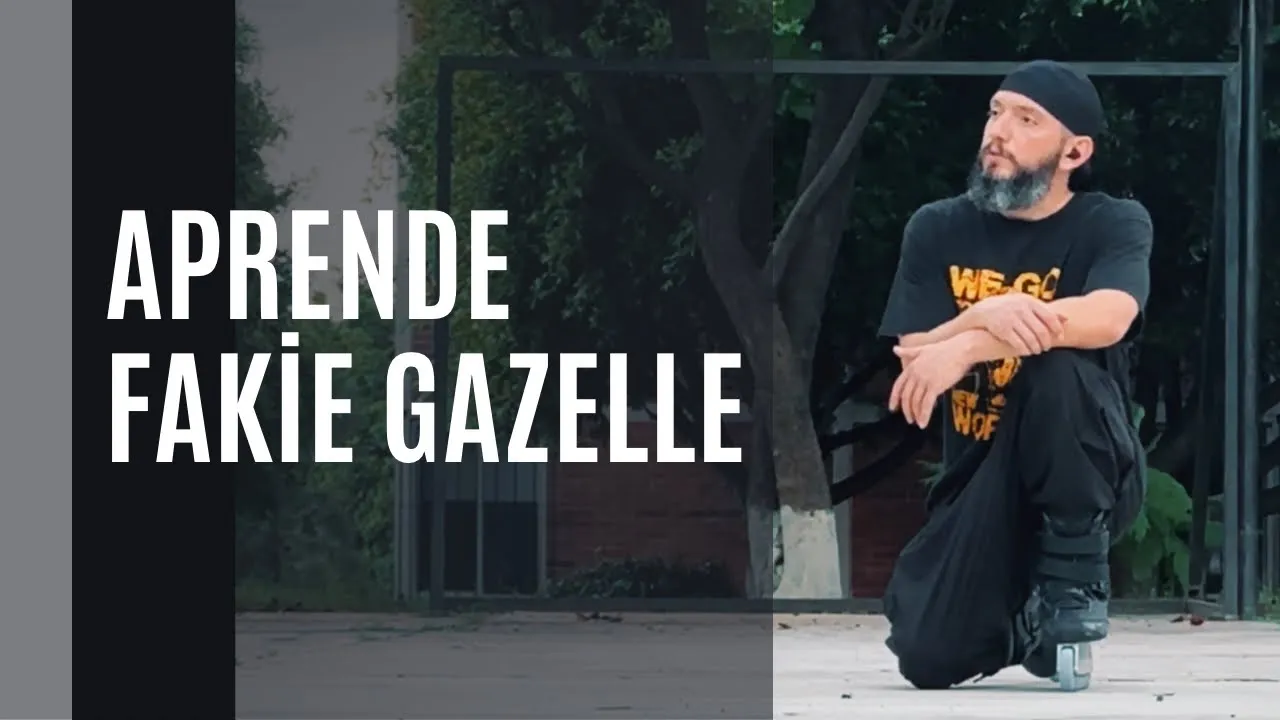
Gazelles are the third stage of the base fundamentals. They are two-foot transitions, formed by the combination of two consecutive Parallel Turns in a single fluid sequence.
The 4 variations are named with acronyms: FOG (Front Open Gazelle), FCG (Front Closed Gazelle), BOG (Back Open Gazelle), BCG (Back Closed Gazelle). Multiplied by left/right, that's 8 variations in total.
This is where the style's flow starts to appear: transitions chain the turns and open the door to improvising with music. The fakie gazelle you see in many videos is a variation that lives on top of the base Gazelles.
Steps
- Context — bring together everything you've learned: unlike the earlier stages, here we no longer analyze the stance without skates — you already have that from Predator, Parallels and Trees. A Gazelle is the combination of two consecutive Parallel Turns in a single transition: you enter skating in one direction and exit in the opposite one, without jumping and without pivoting, only changing the edges.
- Set up two practice circles: until now you used one; for gazelles draw two circles together, because you're going to chain all the variations of the Parallel turns that transform into the transition.
- Break the movement into three parts — entry, climax and exit: the climax is the midpoint, the APEX of the curve (its limit). That's where the transition happens: you change the edges you entered with and let the body exit in the same relationship.
- Front Open Gazelle (start here): enter in an open Parallel turn going forward, reach the climax, transfer the edges, and exit in an open Parallel turn going backward. Practice both sides (left and right).
- Front Closed Gazelle: same entry, but change the shoulder-and-leg relationship (closed). The rule doesn't change: if you enter closed, you exit closed. Play practicing open and closed in different directions and feel how your body reacts.
- Back Open and Back Closed Gazelle — the backward gazelle (the best known): enter in your Parallel going backward; the body compresses as it reaches the end point and pushes on the way out — that's the sensation of 'catching' the gazelle, the 'boom' that expels you. The back closed one has a bit more foot play in the climax and connects with many other combos.
- Cover the 8 variations and play: FOG, FCG, BOG and BCG × left/right. Do free practice around the two circles, combining forward/backward and open/closed. If your Parallels are integrated, unlocking the Gazelles takes little time — the challenge is the flow, not strength.
Common mistakes
- Pausing at the climax: if you stop at the midpoint, you end up with two separate Parallels, not a Gazelle. Think 'transfer the weight', not 'finish one turn and start another' — it's a single continuous movement.
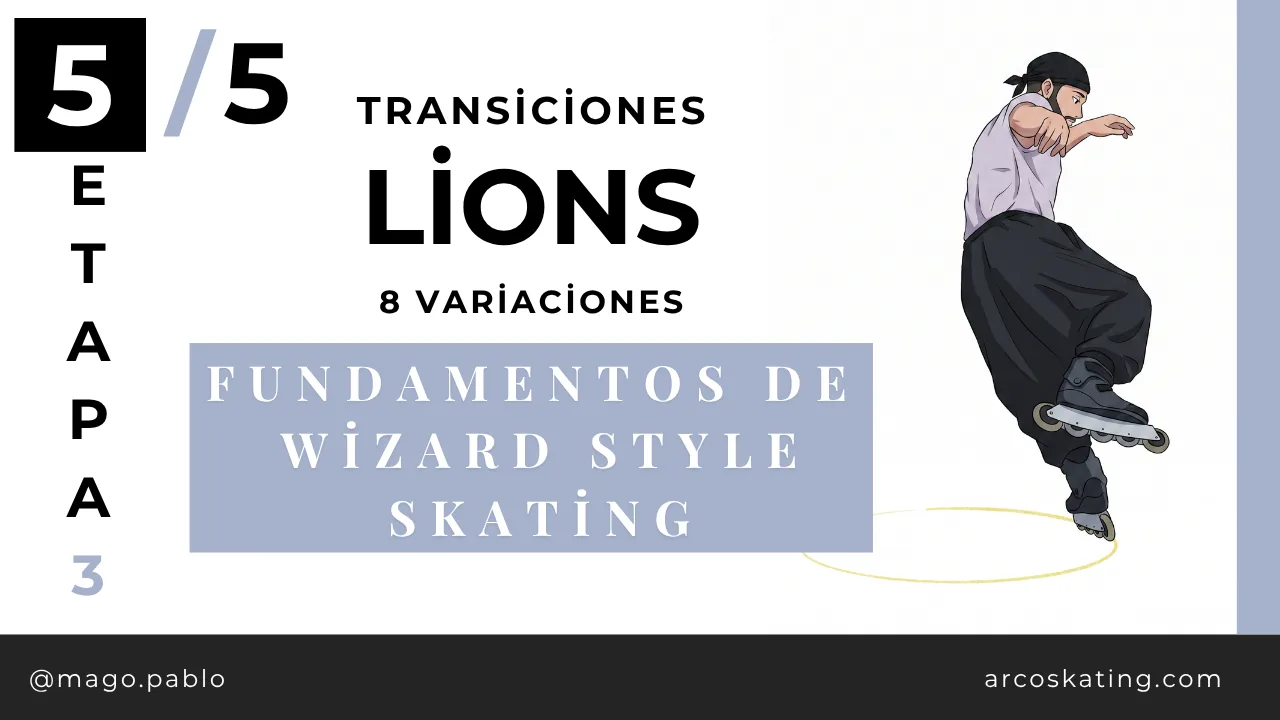
- Lifting a foot during the transfer: the Gazelle is on two feet. If a skate leaves the ground in the transition, it's already a Lion. Keep both skates rolling on the ground through the whole arc.
- Jumping or pivoting instead of changing the edges: the Gazelle rolls on the edges. If you lift the wheels or spin on the toes, you lose the speed and the flow of the line.
- Changing the relationship between entry and exit: if you enter open, you exit open; if you enter closed, you exit closed. Mixing the relationship mid-turn breaks the transition apart.
In one sentence
The Gazelle is two Parallel Turns chained into a single transition: you enter in one direction, reach the climax, change the edges and exit in the opposite one — without jumping, without pivoting, and with both feet rolling. When that change becomes continuous, the wizard flow appears.
Sources
The nomenclature of families and variations follows the official source. The drills, progressions and teaching concepts around it are ARCO's own elaboration, created to communicate the ideas.