How to skate backwards
Posture, push, transitions and how to stop — one of the most searched skills in inline skating.
How do you skate backwards? You need three pieces: a base posture with bent knees and your weight slightly toward the toes, a comfortable transition to get in — via a 180 jump or a two-step turn — and a push pattern, the lemon drill, that gives you speed without lifting your wheels off the ground.
Learning to skate backwards is one of the most searched skills in inline skating. It is the gateway to a whole second half of the language of movement: switch, transitions, longer lines and, in the case of Wizard Style, almost everything that comes after.
In this complete tutorial I show you step by step how to get there: the warm-up, the base posture with its key points and mistakes, two ways to enter (180 jump and two-step), the push drills — lemon and half lemon —, how to stop while going backwards, and the homework to practice between sessions.
The idea is not just to roll backwards, but to feel comfortable in that direction — with control over edges, weight and gaze. Once skating backward becomes natural, everything else on skates starts to open up.
And if your goal is Wizard Style, this is the step you cannot skip: transitioning comfortably between forward and backward is the foundation on which many of the style's more complex moves are built.
Steps
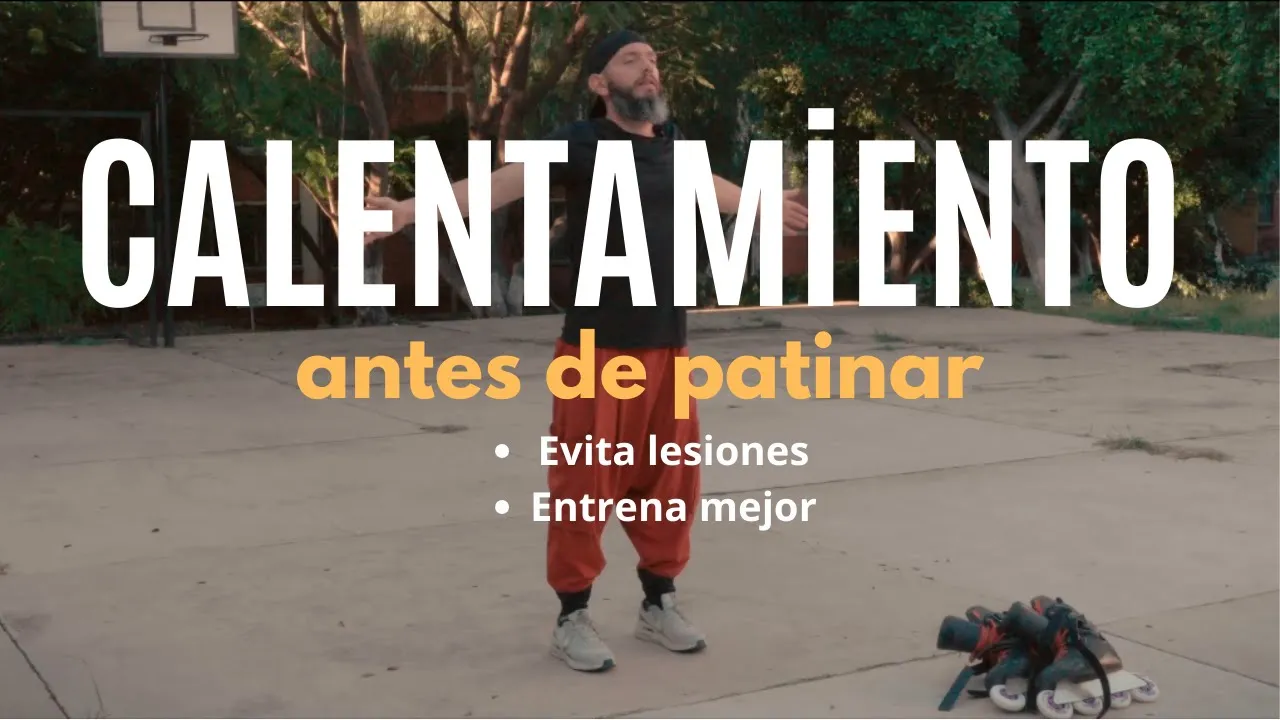
- Warm up before you start: mobilize ankles, knees and hips. Backward skating puts your body in new positions, and it responds much better with the joints awake.
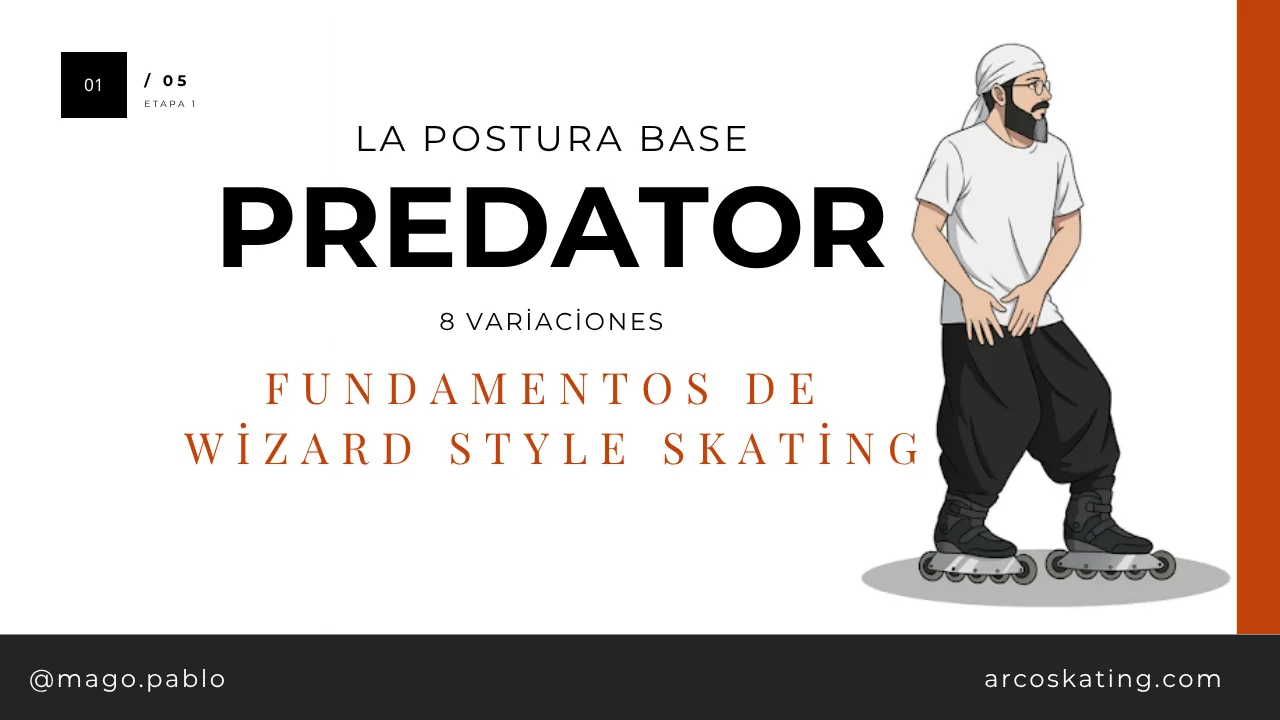
- Build the base posture: bent knees, long back, weight slightly toward the toes and arms visible in front. First while standing still, feeling the edges before you roll.
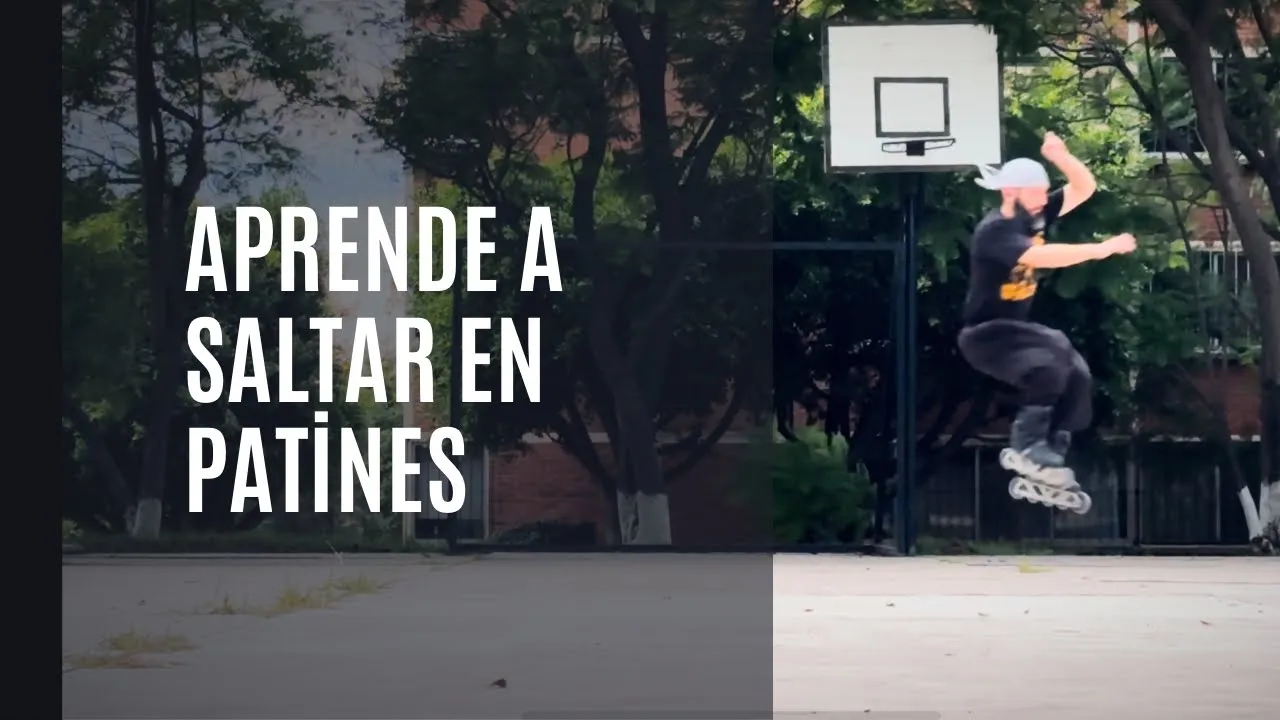
- Enter with a 180 jump: a small, compact jump rotating the whole body, landing with soft knees already in the base posture.
- Enter with two steps: if the jump feels intimidating, turn one skate first and then the other. It is the friendliest transition for your first sessions.
- Generate push with the lemon: draw ovals with both skates — open and close — without lifting the wheels off the ground. The pressure on the edges is what pushes you.
- Refine with the half lemon: one foot draws while the other rolls in a straight line. It is the bridge to the asymmetric push you will use skating in the street.
- Learn to stop going backwards: having a safe exit is what gives you permission to go faster. Practice it at low speed until it becomes a reflex, and take the homework from the video to your next session.
Common mistakes
- Turning only your head: the gaze goes over the shoulder, but control comes from the whole posture — shoulders, hips and knees —, not from the neck.
- Weight on the heels: going backwards, keeping the weight slightly toward the toes keeps you over the stable part of the skate and prevents hard falls.
- Skating upright: without knee flexion the lemon does not work — the push comes from pressure on the edges, and that pressure comes from getting low.
- Going faster than you can stop: learn the exit first; speed arrives on its own once the confidence is there.
In one sentence
Skating backwards is not a separate trick: it is the other half of your skating. Base posture, a comfortable transition to get in, lemons for push and a reliable stop — with those four pieces, backwards stops being foreign territory.
Frequently asked questions
- How long does it take to learn to skate backwards?
- It depends on your forward base. With comfortable posture and balance, most people manage to roll backwards with control within a few sessions of practicing the lemon; feeling natural — looking, stopping, transitioning without thinking — usually takes weeks of consistent practice.
- Do I need to know how to stop before trying it?
- You need to stop confidently going forward. The backward stop is learned within the same process: practice it at low speed from the start, so your speed never runs ahead of your ability to stop.
- Which transition is better: the 180 jump or the two-step?
- Both work and it is worth learning both. The two-step is friendlier at the start because you never lose contact with the ground; the 180 jump is faster and more compact once the base posture is solid.
- Why is it so important for Wizard Style?
- Because transitioning comfortably between forward and backward is the foundation on which many of the more complex moves are built. Gazelles, lions and most of the style's lines assume both directions feel equally natural to you.
Other perspectives on this move
How to skate backwards — posture and key techniques (collab with Checo)
ARCO × Checo (@checo.wheels)